Answer Engine Optimisation in Sri Lanka: How to Get Your Business Named by ChatGPT and AI Search
When someone asks ChatGPT for 'a good web designer in Negombo' or 'the best clinic in Borella', one or two businesses get named. This is the practical playbook for being one of them — including how to test whether you already are.
Uniix Studio
Founder · Uniix Studio
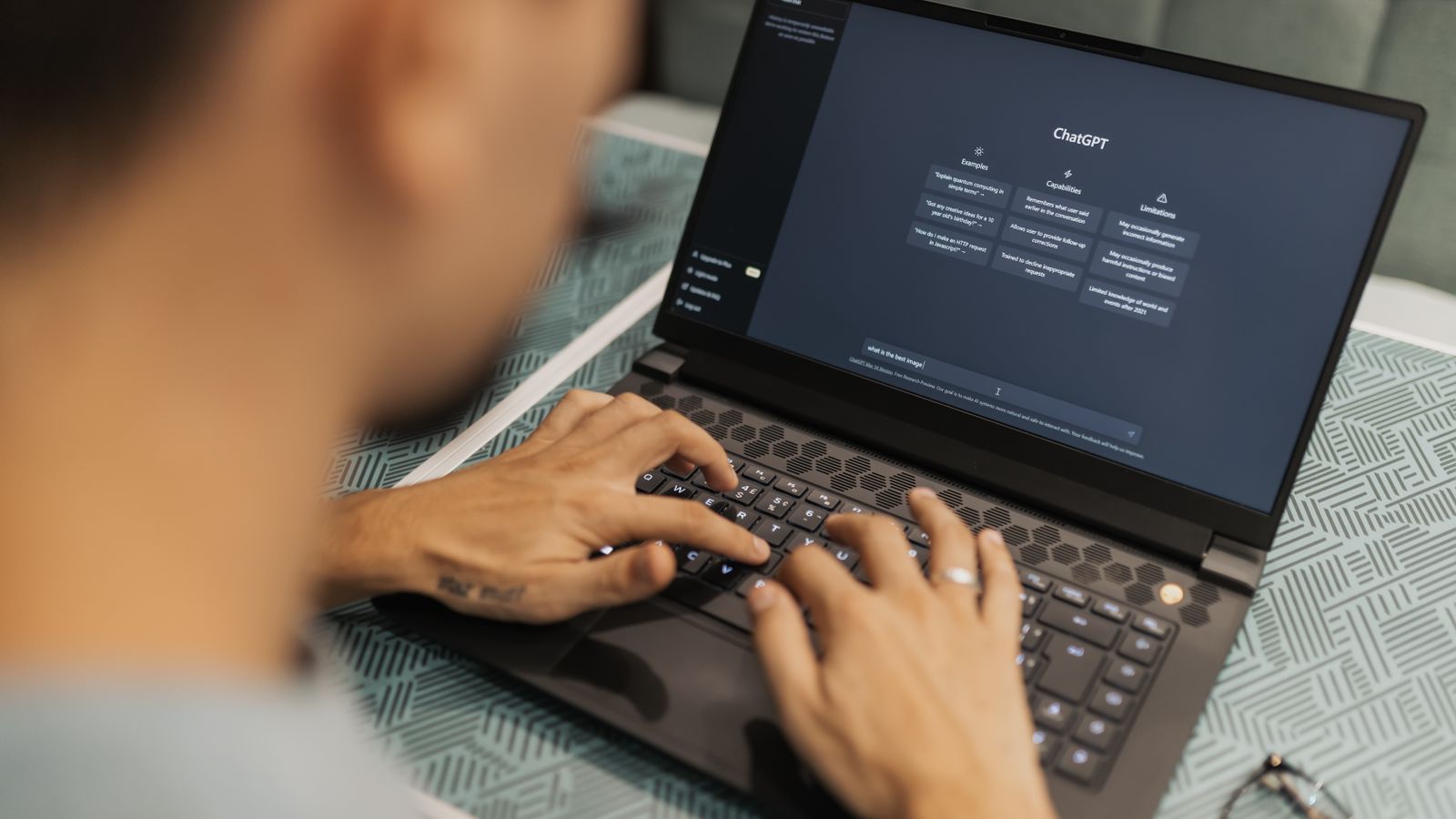
A customer used to search, scan ten results, and choose. Increasingly, they ask an assistant and get one answer naming two or three businesses.
That's a brutal narrowing. Position seven on Google still got a share of clicks. Position seven in an AI answer doesn't exist — you're either named or you're invisible. For Sri Lankan businesses this is happening right now, in the searches that matter most: "a good web designer in Negombo", "reliable printer in Borella", "best guesthouse in Negombo for a family".
This guide is the practical side of that shift. If you want the conceptual grounding first — what GEO, AEO and SGE mean and how the technology works — start with our AI search optimisation guide. What follows is the implementation.
What is answer engine optimisation?
Answer engine optimisation is the work of making your business the one an AI assistant names when someone asks a relevant question. Where SEO competes for a ranking position among links, AEO competes to be included in the answer itself. The inputs overlap with SEO — clear content, technical health, credibility — but AEO adds two demands: answers must be extractable on their own, and your claims must be corroborated somewhere other than your own website.
That second point is the one most businesses miss, so it's worth stating plainly: an AI assistant is reluctant to recommend a business whose only source is that business.
Why local queries are the opportunity
Competing to be named for "best digital agency in Sri Lanka" is hard — the pool is large and well-established players dominate the sources.
Competing to be named for "web designer in Kandana" is a different exercise entirely. The pool of businesses with clear, consistent, machine-readable information in that area is small. Sometimes it's nearly empty. When an assistant has little to work with, the business that has done the basics properly gets named more or less by default.
This is the same structural advantage that makes smaller towns easier to rank in, and it applies with more force to AI search, because assistants need confident information and most local businesses provide none.
How an AI assistant decides who to name
Different systems work differently, but the signals they draw on are consistent:
Entity clarity. Can the system state, unambiguously, what your business is, where it operates, and what it does? A site that never says plainly "X is a Y based in Z serving A, B and C" forces the assistant to guess — and it would rather name a business it doesn't have to guess about.
Corroboration across sources. Your website says you're a web design studio in Colombo. Does your Google Business Profile agree? Your LinkedIn? Directory listings? Articles mentioning you? Agreement across independent sources produces confidence. Contradiction produces silence.
Structured data. Schema markup states facts in a format machines read directly instead of inferring: your organisation, your service area, your FAQs, your articles. It removes ambiguity.
Reviews as evidence. Assistants asked for the "best" of something lean on review corpora. Volume matters less than recency and substance — reviews that describe what was done, in specific places, are far more useful than "Great service!" repeated forty times.
Content that answers questions directly. Passages that stand alone are what get extracted. A paragraph that only makes sense after reading the two above it usually won't be.
Third-party mentions. Being cited, listed, interviewed or referenced elsewhere is the strongest signal of all — and the hardest to fake.
The local AEO checklist
Work through these in order. The early items cost nothing but time.
1. State your entity plainly, in text
Somewhere prominent, in plain sentences, say exactly what you are: "Uniix Studio is a creative digital agency based in Colombo, Sri Lanka, providing brand identity, web development and digital marketing to businesses across Colombo, Wattala, Ja-Ela and Negombo."
That reads as unremarkable to a human, which is why most sites don't bother. It's precisely what a machine needs. Say it once, clearly, and repeat the same formulation elsewhere.
2. Make your name, address and phone identical everywhere
Not similar — identical. Same spelling, same phone format, same street line, across your site, Google Business Profile, Facebook, LinkedIn and every directory. Inconsistency is the most common reason an assistant declines to state a fact about a business.
3. Add structured data
At minimum: Organization or LocalBusiness on your site, FAQPage on pages with questions, Article on posts, and BreadcrumbList for hierarchy. Include areaServed for the towns you cover. If you have one physical location and serve several towns, express that as one address plus service areas — never as multiple addresses, which creates exactly the contradictions you're trying to avoid.
4. Write answers that stand alone
For each question your customers actually ask, write a 40–60 word answer that is complete by itself, then expand beneath it. The FAQ blocks on this site follow that pattern deliberately: a self-contained answer, marked up as FAQPage, that can be lifted without losing meaning.
Use the words customers use, not industry terms. People ask "how much does a website cost", not "what is your engagement fee structure".
5. Build a review corpus with substance
Ask customers to mention what you did and where. "They rebuilt our booking site for our Negombo guesthouse" is worth many times "Excellent work" — it contains the service, the location and the outcome, all of which an assistant can use. Keep them arriving steadily rather than in bursts.
6. Get mentioned somewhere that isn't yours
Local directories, industry associations, chamber listings, partner sites, supplier pages, local press, podcasts. Each independent mention that agrees with your own description raises confidence. This is slow work and it's the part competitors are least likely to do.
7. Publish content only you could write
Generic advice is already covered a thousand times over and gives an assistant no reason to prefer you. Content grounded in your actual market — what a Negombo guesthouse's booking flow needs, what Ja-Ela buyers check before placing an order — is genuinely scarce, and scarcity is what gets cited.
How to test whether it's working
Run this monthly. It takes fifteen minutes and it's the only honest measure of progress.
Open ChatGPT, Perplexity, Gemini and Google, and ask as a customer would:
- "Who are the best [your service] in [your town]?"
- "I need a [your service] near [landmark]. Who should I contact?"
- "Is [your business name] any good?"
- "Compare [your business] and [competitor]."
Record three things: whether you're named, which sources are cited, and whether anything said about you is wrong or out of date. That third one matters more than people expect — an assistant confidently repeating an old phone number is worse than not being mentioned, and it's usually traceable to a stale directory listing you can fix.
Answers vary between users and sessions, so don't over-read a single result. The trend across months is the signal.
What doesn't work
Worth stating clearly, because there's a lot of noise in this space:
- Stuffing your pages with "AI-optimised" phrasing. There's no keyword that makes an assistant like you.
- Mass-generated location pages with the town name swapped. Thin duplicates are penalised in search and provide nothing an assistant would want to cite.
- Paying for bulk directory submissions. Low-quality listings with inconsistent details actively harm the corroboration you're trying to build.
- Buying reviews. Detectable, damaging, and the substance is always generic — which is precisely the kind of review that carries no weight.
- Waiting for it to settle down. The tooling changes constantly; the underlying requirement — be clear, be consistent, be corroborated — has been stable throughout.
The realistic timeline
AEO is slower than a Google Business Profile fix and faster than national SEO.
Structured data and entity clarity are picked up within weeks. Corroboration — directories, mentions, review substance — takes two to four months to accumulate enough for assistants to speak about you confidently. Being named consistently for a competitive local query is a six-month project, not a six-week one.
The compensation is that it compounds and it's defensible. A competitor can outspend you on ads tomorrow. They can't quickly manufacture years of consistent, corroborated presence.
Where to start this week
If you do nothing else: write one clear sentence stating what your business is and where it operates, put it on your homepage and your Google Business Profile, make your contact details identical everywhere, and add FAQ content that answers the five questions customers actually ask. That's a few hours of work and it covers most of the gap for a typical Sri Lankan SME.
Then run the test prompts, note who's being named instead of you, and look at what they've done that you haven't.
Uniix Studio is a creative digital agency based in Colombo, Sri Lanka, working on search, AI visibility and website performance for businesses across Colombo, Wattala, Ja-Ela, Kandana, Ragama and Negombo. Email hey@uniixstudio.com or WhatsApp +94 74 0555 898.
Frequently asked questions
- What is answer engine optimisation (AEO)?
- Answer engine optimisation is the practice of structuring your online presence so AI assistants — ChatGPT, Perplexity, Google's AI Overviews, Gemini — name your business when someone asks a relevant question. Traditional SEO competes for a position in a list of ten links. AEO competes to be one of the two or three businesses mentioned in a single generated answer, which is a far narrower and more valuable slot.
- How is AEO different from normal SEO in practice?
- The foundations overlap heavily — both reward clear content, technical health and credibility. The difference is in format and corroboration. AEO favours content that answers a question directly and early, uses structured data, and is confirmed by sources beyond your own website. An AI assistant is reluctant to recommend a business that only its own site vouches for; it wants agreement across your profile, directories, reviews and third-party mentions.
- Can a small Sri Lankan business realistically get recommended by ChatGPT?
- Yes, and more easily for local queries than national ones. When someone asks for a service in Kandana or Borella, the pool of businesses with clear, consistent, well-structured information is small — often just a handful. Being the clearest and most corroborated business in a small pool is a genuinely achievable goal, and far cheaper than competing for a national keyword.
- Does having FAQ content help with AI search visibility?
- It helps considerably, provided the questions are ones people actually ask and the answers stand alone. AI systems extract self-contained passages, so an answer that makes sense without the surrounding page is far more likely to be pulled and cited. Marking those questions up with FAQPage structured data makes the relationship between question and answer explicit rather than inferred.
- How do I check whether AI assistants currently recommend my business?
- Ask them directly, the way a customer would. Open ChatGPT, Perplexity and Google, and ask things like 'who are the best web designers in Negombo?' or 'recommend a dental clinic in Bambalapitiya'. Note who gets named, which sources are cited, and whether anything said about you is out of date. That output is your baseline — repeat it monthly to track whether your work is landing.
Want to know whether AI search already recommends you? Send Uniix Studio your business name and town — we'll run the prompts across the major assistants and send you the actual answers, including who's being named instead of you.
Get a free brand audit ↗