One Page Website vs Multi-Page: Which Is Better for Sri Lankan SMEs in 2026?
A one-page site is cheaper, faster, and simpler — but it can quietly cap your growth and your SEO. Here's an honest comparison to help Sri Lankan businesses choose the right structure from the start.
Uniix Studio
Creative Digital Agency
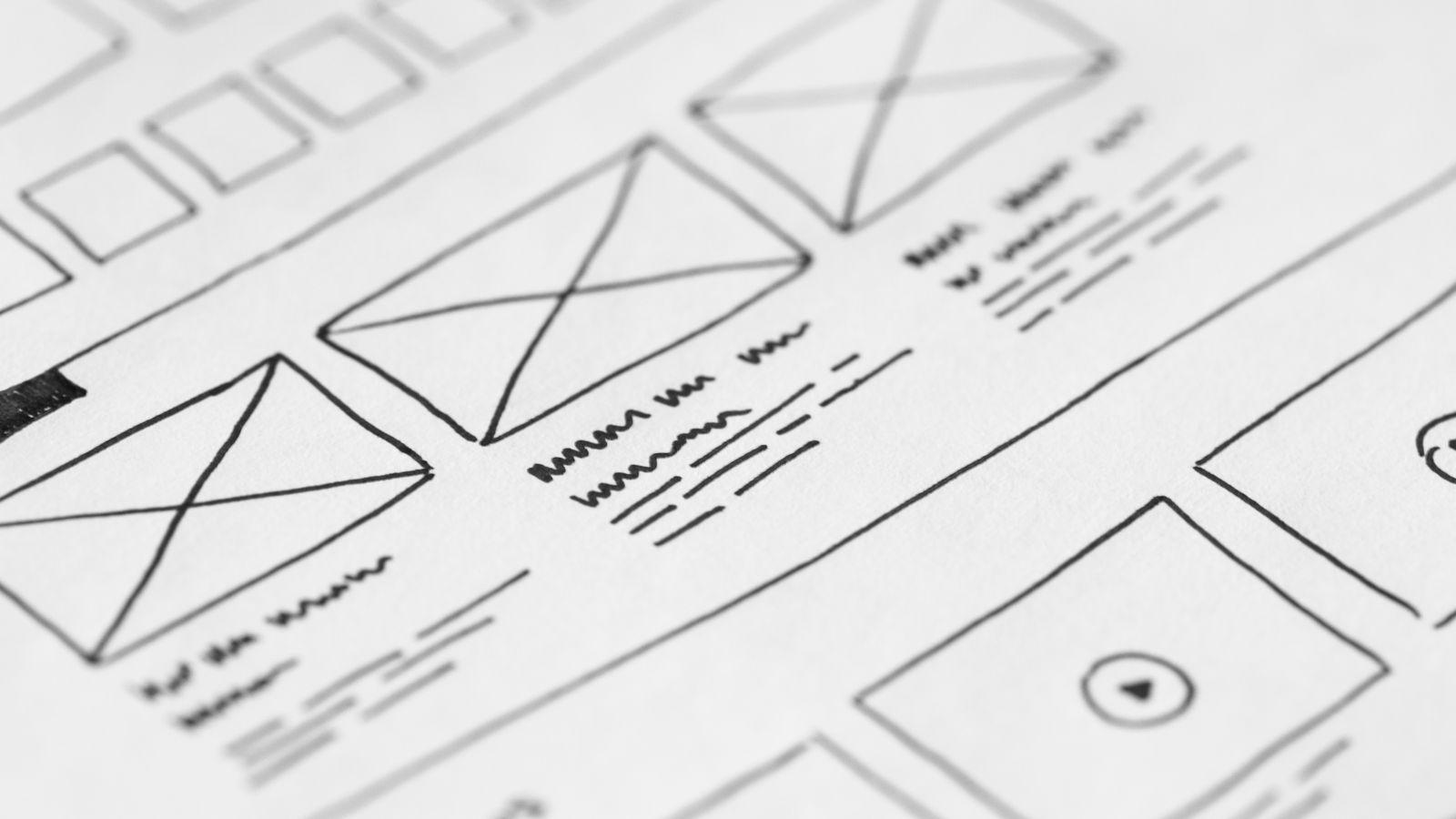
When a Sri Lankan business owner gets a website quote, they're often surprised to be asked: "one page, or multiple pages?" It sounds like a small detail. It isn't. The structure of your website affects its cost, its SEO potential, and how far it can grow with your business.
A one-page website is cheaper, faster, and simpler — genuinely the right choice for some businesses. But it can also quietly cap your growth and your search visibility in ways you won't notice until it's a problem. Here's an honest comparison to help you choose the right structure from the start, because switching later usually means rebuilding.
What each actually means
A one-page website is a single page that visitors scroll through. All your content — intro, services, about, contact — lives on one long page, usually with a menu that scrolls you to different sections rather than loading new pages.
A multi-page website has separate pages for different content — a home page, an about page, individual service pages, a blog, a contact page, and so on — connected by navigation that loads distinct URLs.
The difference isn't just layout. It's how much your site can hold, how many searches it can rank for, and how far it can scale.
The case for one-page websites
One-page sites have real, legitimate advantages.
Lower cost. Less to design and build means a lower price — typically LKR 40,000–100,000 versus LKR 100,000+ for multi-page. For a tight budget, this matters.
Faster to launch. One page is quicker to design, build, and fill with content. If you need to be live fast, one page gets you there.
Simple, focused message. For a business with a single clear offering, a one-page site delivers the message without distraction. The visitor scrolls through a curated story and arrives at one call to action.
Great for specific purposes. One-page sites shine for:
- A single-product business
- An event or campaign
- A personal brand or portfolio
- A startup landing page validating an idea
- A simple service business with one core offering
Good with paid traffic. If you drive visitors from ads or social media rather than organic search, a focused one-page experience can convert well. This overlaps with landing pages — see our landing page design guide.
The limitations of one-page websites
Here's what one-page sites can't do well, and why it matters.
Limited SEO. This is the big one. With only one page, you can effectively target only one primary keyword theme. You can't build a dedicated, optimised page for each service, each location, or each topic. Multi-page sites can rank for dozens of different searches; one-page sites are capped at essentially one theme. If organic search matters to your growth, this ceiling is real.
No room for depth. You can't publish in-depth content on multiple topics, run a blog, or build the content authority that ranks businesses on Google (see our how to rank on Google guide). Everything competes for space on one page.
Hard to scale. As your business grows — more services, more content, more to say — a one-page site runs out of room. And expanding usually means rebuilding, not just adding.
Weaker for complex offerings. If you have multiple distinct services or products that each deserve proper explanation, cramming them onto one page shortchanges all of them.
The case for multi-page websites
Strong SEO potential. Each page can target its own keyword, so your site can rank for many different searches — one page for each service, each location, each topic. This is why virtually every business that relies on organic traffic has a multi-page site.
Room for depth and content. Dedicated pages for each service, a blog for content marketing, detailed about and portfolio pages — the space to build genuine authority and answer every question a customer has.
Scalability. As your business grows, you add pages. New service? New page. Want to start a blog? Add it. The structure expands with you rather than constraining you.
Better for complex businesses. Multiple services, multiple audiences, detailed offerings — each gets the space it deserves.
Professional depth. A well-structured multi-page site signals an established, serious business with substance behind it.
The limitations of multi-page websites
To be fair:
Higher cost. More pages to design, build, and fill — typically LKR 100,000–400,000+ depending on scope.
More content needed. Each page needs content, which is more work to produce (and a common cause of project delays — see our web development timeline guide).
Longer to build. More to create means more time.
More to maintain. More pages means more to keep current.
How to choose
Answer these honestly:
1. How many distinct services or topics do you have?
- One clear offering → one page may suffice
- Multiple services/topics → multi-page
2. Does organic search (SEO) matter to your growth?
- Yes, you want to rank on Google for various searches → multi-page (essential)
- No, you drive traffic from ads/social/referrals → one page can work
3. Will you publish content (a blog)?
- Yes → multi-page (you need somewhere for it)
- No → one page is fine on this dimension
4. How much will your business grow and change?
- Significantly → multi-page (build for where you're heading)
- Staying simple and focused → one page
5. What's your budget — and your 3-year view?
- Tight budget, simple needs → one page
- Investing for growth → multi-page
The scenarios, spelled out
Choose one page if you're:
- A single-product or single-service business with a focused message
- Running an event, campaign, or promotion
- A personal brand, freelancer, or simple portfolio
- A startup validating an idea before investing more
- Driving traffic mainly from ads or social, not organic search
- On a tight budget for a genuinely simple business
Choose multi-page if you're:
- Offering multiple services that each deserve explanation
- Relying on (or wanting) organic search traffic
- Planning to publish content and build authority
- Expecting to grow and add offerings
- A business where depth and professionalism matter to trust
- Building something you want to last and scale for years
The rebuild trap
The most important practical point: converting a one-page site to multi-page usually means rebuilding, not just adding. One-page sites are designed as a single scrolling experience, not structured for expansion. When you outgrow it, you often start over.
So the real question isn't just "what do I need today?" but "where will I be in 2–3 years?" If there's a genuine chance you'll need multiple pages, SEO, and content, building multi-page from the start is usually better value than saving money now and rebuilding later.
Spending LKR 60,000 on a one-page site, then LKR 200,000 rebuilding it as multi-page eighteen months later, costs more than building the LKR 200,000 multi-page site once.
The honest recommendation
For a genuinely simple, single-focus business or a specific campaign, a one-page website is the right, economical choice — don't over-build.
For most small businesses that want to rank on Google, offer multiple services, publish content, and grow, a multi-page site is the better foundation — and building it from the start avoids an expensive rebuild later.
Match the structure to your business and, crucially, to where your business is heading. The cheapest structure isn't always the one-page site — it's the one you won't have to rebuild. For broader cost context across structures, see our website cost Sri Lanka 2026 guide.
Frequently asked questions
- Is a one-page website good for SEO in Sri Lanka?
- One-page websites can rank, but they're limited for SEO. Because you have only one page, you can effectively target only one primary keyword theme — you can't build separate optimised pages for each service, location, or topic. Multi-page sites can target dozens of keywords across dedicated pages, which is why content-and-SEO-driven businesses almost always need multiple pages. If SEO and organic traffic matter to your growth, a one-page site will cap your ceiling.
- When should I choose a one-page website?
- Choose a one-page website when you have a single, focused offering, a simple message, no need for deep SEO, and you're driving traffic from ads or social rather than organic search. It's ideal for a single-product business, an event, a personal brand, a startup landing page validating an idea, or a simple portfolio. If your business is straightforward and you don't need to rank for many keywords, one page can be perfect.
- Is a one-page website cheaper than a multi-page website in Sri Lanka?
- Yes, usually. A one-page website costs less to design and build (LKR 40,000–100,000 typically) than a multi-page site (LKR 100,000–400,000+) because there's less to create. But cheaper upfront can be more expensive over time if you outgrow it and have to rebuild as a multi-page site. Consider where your business will be in a few years — if you'll need more pages, building multi-page from the start is often better value.
- Can I add more pages to a one-page website later?
- Sometimes, but it often means rebuilding rather than simply adding. One-page sites are usually designed as a single scrolling experience, not structured for expansion. Converting to multi-page frequently requires restructuring the design, navigation, and content architecture — effectively a new build. If there's a real chance you'll need multiple pages within a couple of years, it's usually cheaper to build multi-page from the start.
- What's better for a small business website, one page or multiple pages?
- For most small businesses that want to rank on Google, offer multiple services, and grow, multi-page is better because it supports SEO, deeper content, and scalability. One page is better for very simple, single-focus businesses, or as a fast, affordable starting point. The deciding factors are how many services/topics you have, how much you rely on organic search, and how much you plan to grow.
Not sure which structure fits your business? Uniix Studio advises honestly and builds either. Tell us your goals and we'll recommend the right one.
Get a free brand audit ↗
